
Guides
Where to Stay in Zanzibar: Nungwi, Paje, Stone Town and Beyond
30 July 2026
Zanzibar is small, but its coasts feel like different islands entirely. Deciding where to stay in Zanzibar shapes your whole trip more than almost any other decision — more than which hotel, more than which month. Before booking anything, it's worth understanding what each coast actually offers, and who it's really for.
Stone Town & the West Coast
Stone Town is Zanzibar's historic heart, a UNESCO World Heritage old town of narrow alleys, carved wooden doors, and centuries of Swahili, Arab, Persian, and Indian trading history layered on top of each other. It's not a beach base — the swimming here isn't the draw — but it's the right choice if you want history, food, and culture within walking distance, or if you're splitting your trip and want a cultural anchor before heading to the coast.
The wider west coast, stretching south toward Fumba, tends to be quieter and less built up for tourism than the east or north: more residential, more local life visible day to day.
Nungwi & Kendwa (the North)
The north tip is Zanzibar's most developed tourist area, and for a practical reason: the tide barely moves here. Unlike the east coast, Nungwi and Kendwa sit on steeper, rockier ground, so the water stays swimmable at almost any hour of the day. That single fact drives everything else — more resorts, more nightlife, more dive schools, more sunset bars.
Nungwi itself is busier and more built up, with a wider range of budgets and a livelier evening scene. Kendwa, just along the coast, is quieter and known for a long, open beach and a slower pace, though it still gets a crowd for its famous full-moon parties.
The East Coast (Paje, Bwejuu, Jambiani, Kiwengwa, Matemwe, Pongwe, Uroa)
The east coast is the opposite tidal story: a shallow, flat seabed means the water can recede for hundreds of metres at low tide, exposing sand flats and tidal pools, then return fully a few hours later. It's dramatic, and it shapes how each town has developed. If you're picking a coast based on the tide, our guide to how Zanzibar's tides work covers the timing in more depth.
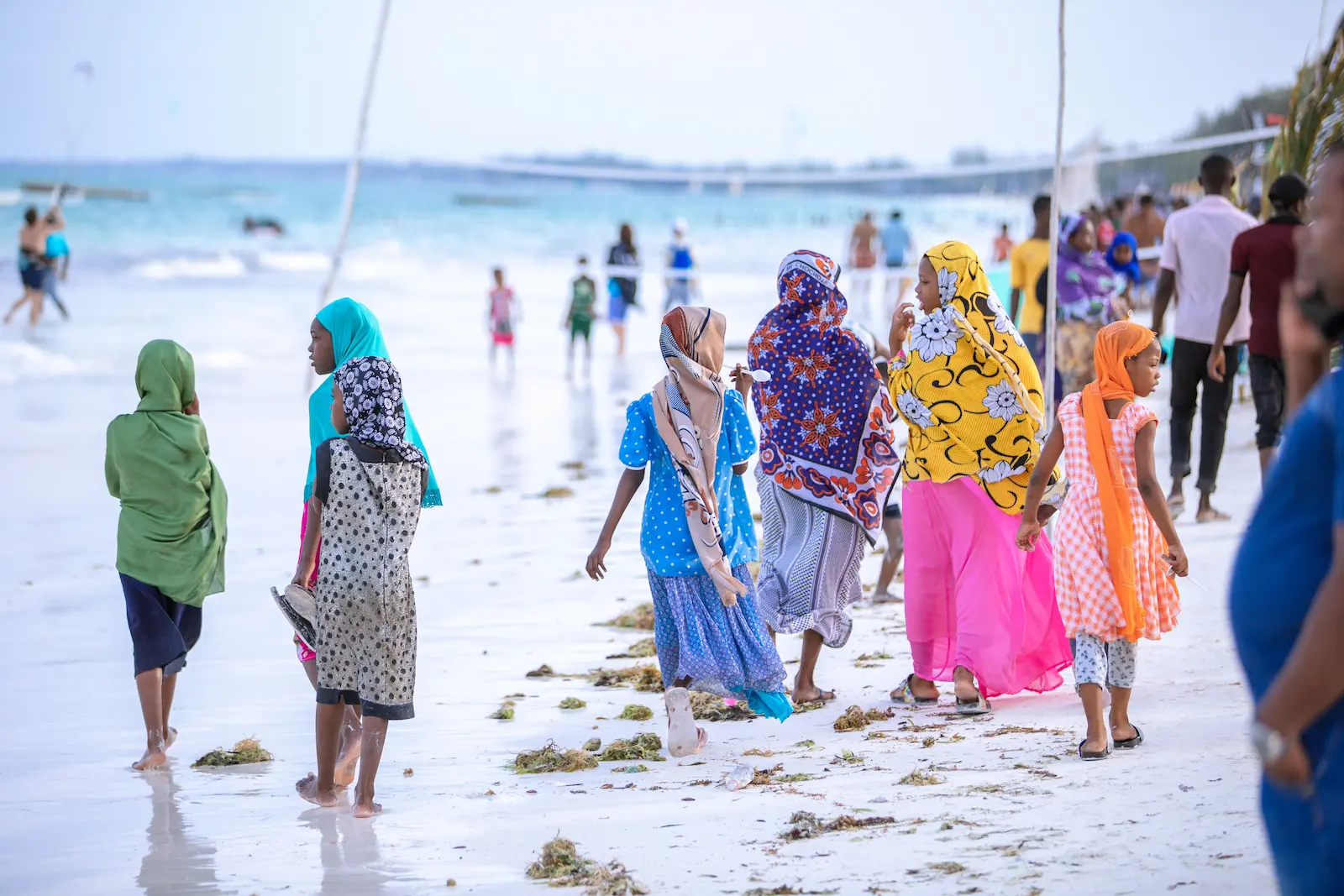
Paje is Zanzibar's kitesurfing capital: wide beach, consistent wind, a genuinely international, youthful crowd. Bwejuu, just north, is quieter with a similar beach character. Jambiani further south has a more traditional, village feel — seaweed farming is still a visible part of daily life along this stretch of coast.
Kiwengwa and Pongwe, further north, lean more toward resort-style stays, often larger properties set back from smaller, calmer beach coves. Matemwe, at the northern end of the east coast, is the jumping-off point for trips to Mnemba Atoll, one of the island's best snorkelling and diving spots. Uroa, between Kiwengwa and Pongwe, is smaller and quieter still, less built up than its neighbours on either side.
Kizimkazi & the South
The south coast, anchored by Kizimkazi, is Zanzibar's quietest, least developed tourist area. Like the north, its tide is milder than the east coast's dramatic swing — the coastline here doesn't expose nearly as far. It's best known as the departure point for dolphin tours into Menai Bay, and for a genuinely slower pace than anywhere else on the island.
Mtende, nearby, has a similar quiet character, with a small cove and Salaam Cave worth visiting when the tide allows.
How to actually choose where to stay in Zanzibar
- Nightlife and reliable swimming: the north — Nungwi or Kendwa
- A real cultural base, with beach days as day trips: Stone Town
- Kitesurfing, a younger crowd, a barefoot east-coast feel: Paje or Bwejuu
- Village life and slower mornings: Jambiani or Uroa
- Snorkelling and diving: Matemwe, closest to Mnemba
- Properly getting away from it all: the south around Kizimkazi
Many visitors split their stay — a few nights in Stone Town, then a longer stretch on the coast — rather than picking just one base for the whole trip.
Free download
Your free guide to Zanzibar.
The places, beaches, restaurants and small details we tell our own friends about before they visit. Delivered straight to your inbox.
- • Visa & Entry — what you actually need
- • Best time to visit — month by month
- • Tides — the thing nobody tells you
- • Where to stay — areas explained
- • Culture & dress — what to know
- • Practical basics — money, SIM, transport
More from the journal
Guides
Zanzibar Culture & Dress Code: What to Know Before You Go
Zanzibar's history, religion, and culture explained, plus a clear guide to what to actually wear and how to be respectful, not the guesswork version.
12 September 2026

Guides
Is Zanzibar Safe to Visit? What Happened and Where Things Stand
What happened in Tanzania in 2025, how it affected Zanzibar specifically, and where official travel guidance stands right now — the honest picture, not the recycled blog-post version.
28 August 2026

Guides
Zanzibar Vaccinations & Health: What You Actually Need to Know
Yellow fever, malaria, and what's actually required versus recommended before you travel to Zanzibar — the clear answer, not the Facebook group version.
18 August 2026