
Guides
Things to Do in Stone Town, Zanzibar: A Full Guide
9 August 2026
Most people come to Zanzibar for the coast, but Stone Town deserves its own trip, not just a stopover on the way to the beach. It's the historic heart of the island, and if you're wondering what to do in Stone Town, the honest answer is: more than most visitors expect. It's a UNESCO World Heritage Site since 2000, and one of the few places on the coast where centuries of Swahili, Arab, Persian, and Indian history are still visible in the buildings themselves, not just in a museum. Here's what's actually worth your time.
The Old Fort
Built by Omani Arabs around 1699, on the site of an earlier Portuguese chapel, the Old Fort (Ngome Kongwe) is one of the oldest structures in Stone Town. Over the centuries it's served as a garrison, a prison, and even a railway terminal. Today it's a cultural hub, art galleries, craft shops, and an open-air amphitheater inside its walls, and it's free to enter, open daily from around 8am to 6pm. Worth climbing up onto the ramparts for the view alone.

The House of Wonders
Right next to the Old Fort stood the House of Wonders (Beit al-Ajaib), built in 1883 for the Sultan and once the largest building in Zanzibar, the first in East Africa to have electricity and an elevator. It collapsed in 2020 and now stands in ruins, still worth seeing from the outside for the scale of what it once was, but there's no functioning interior to visit anymore.

The Old Slave Market and Anglican Cathedral
A genuinely sobering, essential part of Stone Town's history. This was the site of Zanzibar's last active slave market, closed in 1873. The Anglican Cathedral of Christ Church was deliberately built on the site afterward, completed in 1879, its altar marks the exact location of the former whipping post. Underground chambers where enslaved people were held before auction are still there to see, along with a memorial sculpture. Not an easy visit, but a real one.
Darajani Market
Stone Town's main market, and the best way to see everyday local life up close, fish, meat, spices, produce, fabric, alongside stalls selling souvenirs and crafts. It's loud, crowded, and not sanitized for tourists, which is exactly the point. Worth going with an open mind and a willingness to haggle.

Forodhani Gardens
A small park right on the waterfront, facing the Old Fort. Quiet enough during the day, but it transforms after sunset into Stone Town's night food market, Zanzibari street food, grilled seafood, sugar cane juice, and the famous "Zanzibar pizza," all served from stalls under string lights. One of the best low-key evenings you can have in Stone Town.
Freddie Mercury's childhood home
Queen's Freddie Mercury was born in Stone Town, and his childhood home on Gizenga Street is a genuine point of local pride, marked and visited by fans from around the world.
The wooden doors
Not a single site, just something to notice as you walk. Stone Town's carved wooden doors, some genuinely centuries old, are one of the city's defining details, a mix of Arab and Indian design traditions, worth slowing down for as you wander the alleys rather than rushing between the named landmarks.

Practical tips for visiting Stone Town
Stone Town is genuinely walkable, the old town is compact and most of what's worth seeing is within a short distance on foot. A couple of days is enough to see the highlights without rushing, and many visitors pair it with a longer stay on the coast rather than treating it as a full standalone trip.
Free download
Your free guide to Zanzibar.
The places, beaches, restaurants and small details we tell our own friends about before they visit. Delivered straight to your inbox.
- • Visa & Entry — what you actually need
- • Best time to visit — month by month
- • Tides — the thing nobody tells you
- • Where to stay — areas explained
- • Culture & dress — what to know
- • Practical basics — money, SIM, transport
More from the journal
Guides
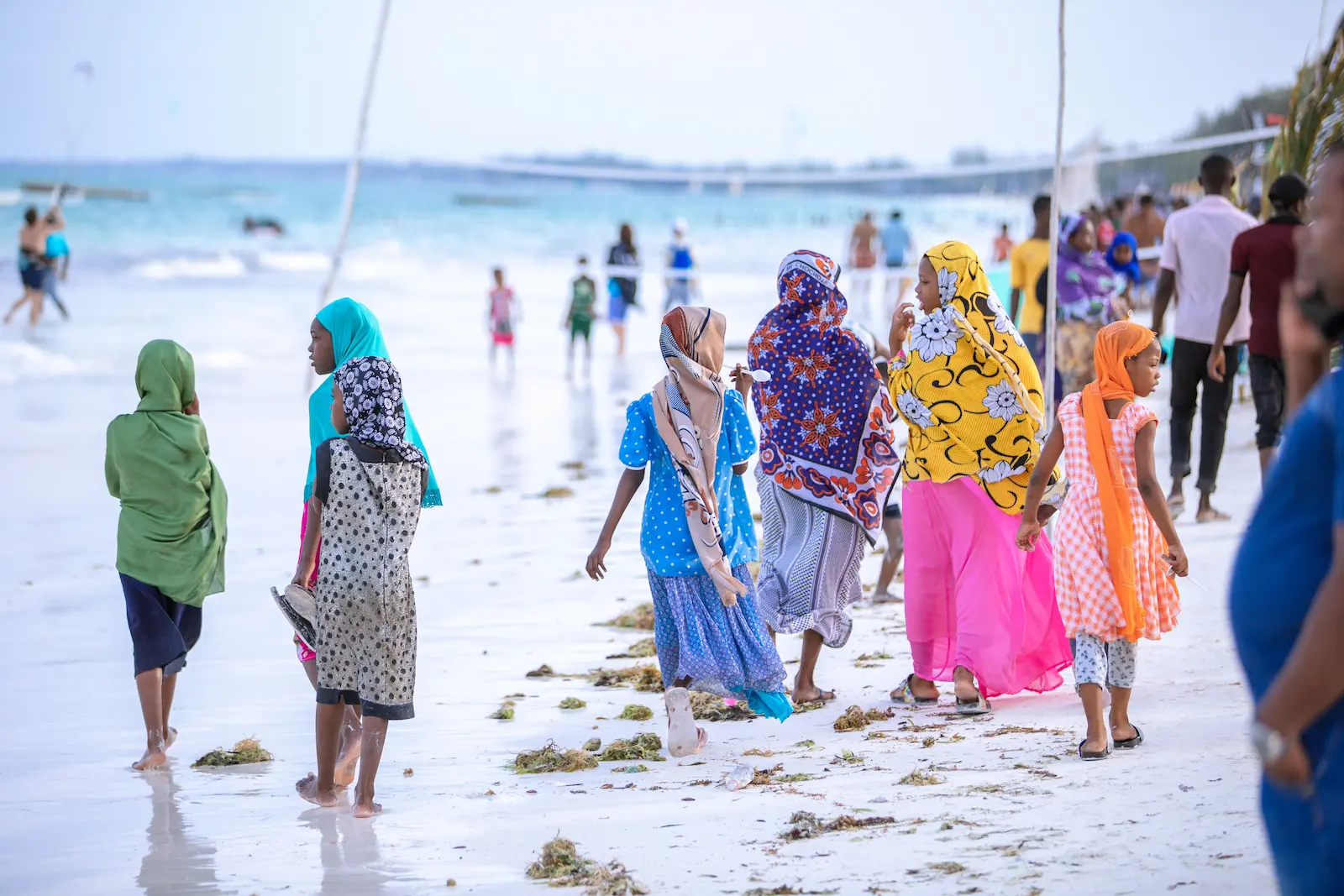
Zanzibar Culture & Dress Code: What to Know Before You Go
Zanzibar's history, religion, and culture explained, plus a clear guide to what to actually wear and how to be respectful, not the guesswork version.
12 September 2026

Guides
Is Zanzibar Safe to Visit? What Happened and Where Things Stand
What happened in Tanzania in 2025, how it affected Zanzibar specifically, and where official travel guidance stands right now — the honest picture, not the recycled blog-post version.
28 August 2026

Guides
Zanzibar Vaccinations & Health: What You Actually Need to Know
Yellow fever, malaria, and what's actually required versus recommended before you travel to Zanzibar — the clear answer, not the Facebook group version.
18 August 2026